No. 010Economics & Politics
Pax Africana
There is a concept called Pax Africana.
Kenyan scholar Ali Mazrui coined the term in 1967. His argument was simple but radical: that Africa must be the primary guarantor of its own peace and prosperity. Not Western aid. Not colonial frameworks repainted with new flags. Africa, by Africans, for Africa.
More than five decades later, the concept reads less like a political philosophy and more like an unfinished project. Because here is what nobody says out loud: Africa already powers the modern world. It just has not collected the receipts.
This is not inspiration. It is a structural problem.
The talent exports itself
This month's NBA Draft featured players of African descent throughout, with 23 international players from 15 countries selected, marking the second-highest number of international picks in NBA history. Among them, Khaman Maluach of South Sudan was selected 10th overall, becoming the highest-drafted alumnus of NBA Academy Africa and the Basketball Africa League ever.
He is 18. He cried on the stage. His tears were the tears of a continent that keeps producing greatness and exporting it at a discount.
But it is not just basketball. Afrobeats is now a global genre. Burna Boy sells out arenas on every continent. Tems has a Grammy. Rema's Calm Down became one of the most streamed songs in the world. Nollywood is the second-largest film industry by volume on the planet. Africa is not a cultural footnote. It is the source material for some of the most commercially valuable culture being consumed globally right now.
The question nobody asks loudly enough is: who owns the streaming platforms? Who owns the labels? Who captures the licensing revenue?
We have produced stars without building industries around them.
The resources export themselves too
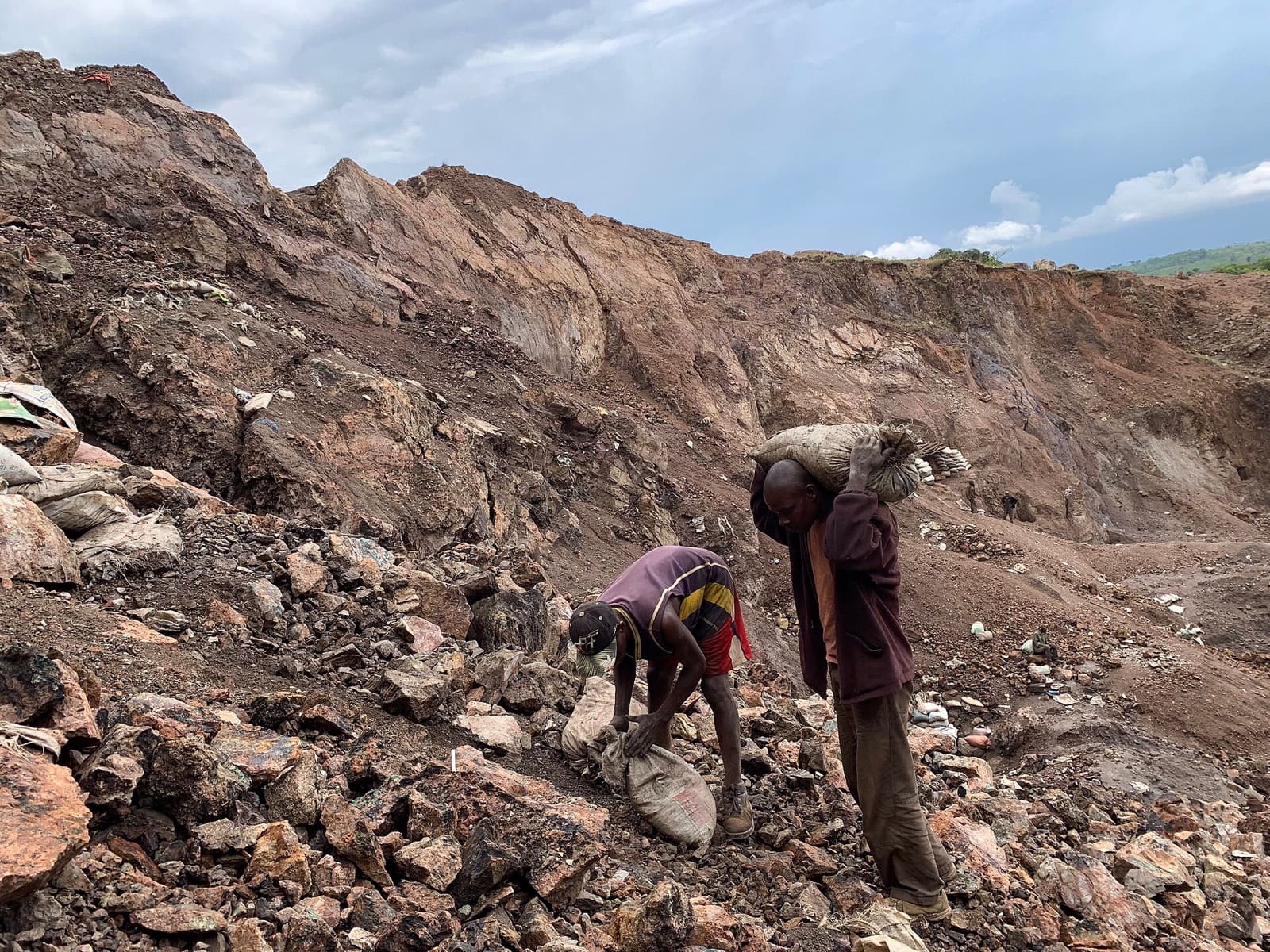
The Democratic Republic of Congo sits on an estimated $24 trillion in untapped mineral resources, including cobalt, which is the backbone of every electric vehicle battery being celebrated in Silicon Valley and Berlin. The world is building a green future on Congolese soil, while Congo remains one of the poorest countries on earth.
That is not irony. That is extraction wearing a sustainable label.
The problem is not the absence of resources. It is the position Africa occupies in global value chains. The highest profits are captured in processing, manufacturing, finance, and technology, activities that happen far from the mines themselves. Africa digs. Others refine, manufacture, and sell. Africa earns the smallest margin in a transaction made possible entirely by African land.
There are signs of something shifting
The Dangote Refinery in Lagos is now the largest single-train petroleum refinery on the planet. Built by an African man, on African soil, with the aim of breaking the cycle of a continent that exports crude oil and buys back refined petroleum at a premium.
But Dangote alone is not the argument. The argument is what he represents alongside everything else happening at once: the African Continental Free Trade Area creating the largest single market by country membership in the world, African fintech rewriting how money moves across the continent, mobile banking innovations pioneered here now being studied and replicated elsewhere.
For the first time, there are structural interventions being built at scale, not just individual heroes.
This has been attempted before
Kwame Nkrumah saw it. His vision of a politically unified Africa was partly about this exact problem: that fragmented nations would always be weaker negotiating partners than the sum of their parts. The Lagos Plan of Action in 1980 said explicitly that Africa needed to reduce economic dependence on external actors and build internal value chains. The African Union's peacekeeping efforts have been an attempt, imperfect but real, to demonstrate that the continent can manage its own security without outsourcing it.
Pax Africana has been attempted before. It has not yet been completed.
What Mazrui actually meant
Pax Africana was never just a foreign policy argument. It was a demand for coherence. That what Africa produces, Africa should also benefit from. That the peace and prosperity the continent enables elsewhere should eventually return home.
The talent is not the problem. The talent has always been there. The resources are not the problem. The resources were always there.
The problem is where the value goes after it leaves.
That work, as Mazrui would have wanted, belongs to us.
This essay was first published on substack.com.
Read next, on related subjects
No. 005Economics & Politics
Why Democracy Is Flawed
Everyone defends democracy the same way. “It’s the worst system except for all the others.” Churchill said it. Politicians quote it. Academics repeat it. But defending something by pointing at worse alternatives isn’t…
No. 020Economics & Politics
War Spoils or Debris?
There is something worth examining about the way we remember significant moments in our history. We celebrate independence, political movements, revolutions, military struggles and the individuals who stood at the…
No. 013Economics & Politics
Billion-Dollar Companies, Ordinary Lives
Every time an African startup crosses the billion-dollar mark, we celebrate. And honestly, I understand why. I feel that pride too. There is something exciting about seeing an African company become valuable enough for…